Introduction
Video has become an essential part of modern business communication. Companies use videos for marketing campaigns, product demonstrations, customer education, employee training, and social media engagement. However, traditional video editing workflows often require significant manual effort, from reviewing raw footage to making cuts, improving audio, adding captions, and optimizing videos for different platforms.
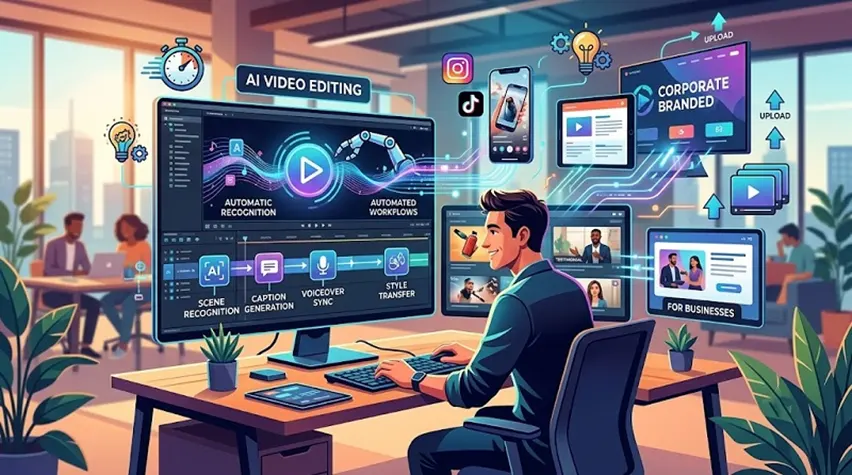
The rise of AI-powered video editing software is changing this process by introducing automation into different stages of production. Instead of handling every editing task manually, creators can now use intelligent tools that analyze footage, understand instructions, and assist with complex editing workflows.
Platforms such as invideo editor demonstrate how AI is becoming integrated into professional video editing environments through features like AI-assisted timeline editing, automated content processing, intelligent editing agents, and workflow automation.
AI Timeline Editing: Moving Beyond Manual Video Cuts
One of the biggest changes in modern video editing is the shift from purely manual editing toward AI-assisted workflows.
Traditional editing requires creators to review every clip, identify useful sections, remove unwanted footage, and arrange content on a timeline. AI-powered editors introduce a more interactive approach where users can provide instructions and allow the system to assist with organizing and editing footage.
invideo Editor’s timeline editor introduces AI agents that can work with uploaded footage and assist with editing tasks. Users can create an agent, provide instructions, and assign tasks such as removing mistakes, reducing empty spaces, or improving the structure of a video.
This type of workflow represents a shift where AI functions as an editing assistant rather than simply being a collection of automated effects.
AI Agents for Repetitive Editing Tasks
Many video editing activities are repetitive but necessary. Removing silent sections, cutting unnecessary takes, and organizing footage can consume a large portion of production time.
AI agents are designed to handle these time-consuming tasks by interpreting instructions and applying them directly within the editing workflow.
For example, an editor working with interview footage may need to remove pauses, tighten conversations, and improve pacing. Instead of manually searching through hours of footage, an AI agent can assist with creating an initial edited version.
This allows human editors to focus more on creative decisions such as storytelling, visual style, and audience engagement.
Automatic Video Analysis and Smart Editing Assistance
Modern AI video editors use video analysis capabilities to understand footage before making editing decisions.
Instead of treating every clip as individual frames, AI systems can analyze elements such as:
- Scene changes
- Speech patterns
- Video structure
- Audio quality
- Important moments within footage
This Agentic video editor workflows include AI-assisted analysis where uploaded videos can be reviewed before generating edits. The AI agent can examine footage, understand editing instructions, and create a structured timeline based on the requested output.
This reduces the amount of manual preparation required before editing begins.
Automatic Audio Improvement and Dialogue Processing
Audio quality plays a major role in professional video production. Poor sound, background noise, and inconsistent volume levels can reduce viewer engagement even when the visuals are strong.
AI-powered editing tools are increasingly adding audio intelligence features that help improve dialogue and overall sound quality.
Common AI audio workflows include:
- Removing unwanted background noise
- Improving voice clarity
- Balancing audio levels
- Managing background music
- Cleaning dialogue tracks
The broader trend is that agent based video editing platforms are combining visual editing and audio processing into a single workflow instead of requiring separate tools for every production stage.
AI-Powered Color and Visual Enhancements
Color correction and visual adjustments traditionally require technical knowledge and manual effort. Editors often spend time balancing exposure, adjusting colors, and creating consistency between different clips.
AI-assisted editing workflows are making these processes easier by helping analyze footage and applying intelligent adjustments.
Includes AI-assisted options where editing agents can help with tasks such as color grading adjustments and visual optimization as part of the editing process.
For businesses producing large volumes of content, these capabilities can help maintain consistent visual quality across multiple videos.
Automatic Formatting for Different Platforms
Businesses rarely create content for only one platform. A single video may need versions for:
- YouTube
- Instagram Reels
- Websites
- Training platforms
Each platform requires different aspect ratios and presentation styles.
AI editing tools simplify this process through features such as automatic reframing and support for multiple video formats.
Supports creating vertical video formats and adjusting timelines for different aspect ratios, helping creators prepare content for different publishing requirements.
Exporting Editable Projects for Professional Workflows
Although AI can automate many editing tasks, professional editors often need additional control over the final output.
Modern AI video editors are adapting by supporting workflows where AI handles initial editing while professionals complete advanced adjustments in traditional editing software.
AI video editor includes options to export projects in editable formats that can continue in professional editing environments such as DaVinci Resolve, Premiere Pro, and Final Cut workflows.
This approach creates a balance between automation and human creativity.
The Role of AI Video Editing in Business Software Innovation
AI video editing reflects a larger movement happening across software industries. Modern applications are becoming more intelligent by combining automation, natural language interaction, and task-based AI assistance.
For businesses, this means software tools are no longer limited to performing individual actions. They are increasingly becoming workflow partners that help users complete complex processes faster.
Features such as AI agents, automatic editing assistance, smart analysis, and intelligent formatting demonstrate how software is evolving from traditional tools into adaptive systems.
Conclusion
AI video editing software is changing how businesses create and manage digital content. Features such as AI editing agents, automated timeline creation, audio enhancement, visual adjustments, and flexible export workflows are reducing the amount of manual work involved in video production.
New age video editing tools like invideo represents this broader shift toward intelligent editing environments where AI supports creators throughout the production process. Rather than replacing creative professionals, these tools provide automation that allows teams to focus more on strategy, storytelling, and delivering meaningful content.
As AI continues advancing, video editing will increasingly become a combination of human creativity and intelligent software assistance.
